
Residential Mental Health Facilities vs Outpatient Care sets the stage for this enthralling narrative, offering readers a glimpse into a story that is rich in detail and brimming with originality from the outset.
As we delve into the contrasting worlds of residential mental health facilities and outpatient care, we uncover a myriad of perspectives that shed light on the complexities of mental health treatment.
Residential Mental Health Facilities
Residential mental health facilities are structured environments designed to provide round-the-clock care and support for individuals with severe mental health issues who require intensive treatment and supervision.
Typical Setting and Structure
Residential mental health facilities are often located in peaceful and secluded areas, away from the hustle and bustle of city life. These facilities can vary in size, ranging from small group homes to larger institutional settings. The environment is carefully designed to promote healing and recovery, with comfortable living spaces, therapy rooms, and outdoor recreational areas.
Types of Services Offered
- Individual and group therapy sessions
- Medication management and monitoring
- Life skills training and support
- Recreational activities and social outings
- 24/7 supervision and support from trained staff
- Nutritional counseling and meal planning
Advantages and Disadvantages
- Intensive and specialized care tailored to individual needs
- Structured daily routines and therapeutic activities
- 24/7 support and supervision for safety and crisis intervention
- Opportunity to focus solely on recovery without distractions
- Costly compared to outpatient care options
- Lack of freedom and independence due to structured environment
- Potential feelings of isolation from the outside world
- Longer duration of stay may disrupt work or school commitments
Advantages:
Disadvantages:
Outpatient Care
Outpatient care offers flexibility in scheduling and treatment options, allowing individuals to receive mental health support while continuing with their daily lives. This type of care is suitable for those who do not require 24/7 supervision or intensive treatment.
Types of Therapies
Outpatient care settings provide a range of therapies to address different mental health needs. These may include:
- Cognitive Behavioral Therapy (CBT): Helps individuals identify and change negative thought patterns and behaviors.
- Dialectical Behavior Therapy (DBT): Focuses on managing emotions and improving relationships.
- Group Therapy: Allows individuals to connect with others facing similar challenges and receive support.
- Medication Management: Involves monitoring and adjusting medication to address symptoms effectively.
Preferred Over Residential Facilities
Outpatient care might be preferred over residential mental health facilities in situations such as:
- Mild to moderate mental health conditions that do not require constant supervision.
- Individuals who have a strong support system at home and can benefit from therapy while maintaining their daily routines.
- Those who prefer the flexibility of scheduling appointments around work or personal commitments.
Treatment Approaches
Residential mental health facilities and outpatient care utilize different treatment approaches to address the needs of individuals with mental health conditions.
Role of Medication Management
In residential mental health facilities, medication management is often a core component of treatment. Psychiatrists regularly evaluate patients, adjust medications as needed, and monitor for any side effects. In outpatient care, medication management is also important but typically involves less intensive oversight due to the less structured nature of appointments.
Individualized Treatment Plans
In both settings, individualized treatment plans are crucial for addressing the unique needs of each patient. In residential facilities, these plans are often developed through multidisciplinary team meetings involving psychiatrists, therapists, and other healthcare professionals. Outpatient care may involve collaboration between the patient, psychiatrist, and therapist to create a personalized plan that can be implemented outside of regular appointments.
Patient Experience
Residential mental health facilities offer a structured and supportive environment for patients. With 24/7 care provided by trained professionals, patients in these facilities receive constant monitoring and support to help them focus on their treatment and recovery journey. The communal living arrangements also allow patients to connect with others facing similar challenges, fostering a sense of community and understanding.
Support Systems in Outpatient Care
- Regular therapy sessions: Patients receiving outpatient care have access to regular therapy sessions with mental health professionals to discuss their progress, challenges, and strategies for coping.
- Medication management: Outpatient care often includes medication management services to ensure patients are taking their prescribed medications correctly and experiencing the desired effects.
- Crisis intervention: Outpatient care facilities have protocols in place to address any crisis situations that may arise, offering immediate support and guidance to patients in need.
Importance of Family Involvement
Family involvement is crucial in the treatment process for both residential and outpatient settings. In residential facilities, family therapy sessions can help mend relationships, improve communication, and provide a support system for the patient upon discharge. In outpatient care, family members play a vital role in providing ongoing support, monitoring the patient's progress, and helping them navigate daily challenges.
Family involvement can also help reduce feelings of isolation and improve overall treatment outcomes for the patient.
Epilogue
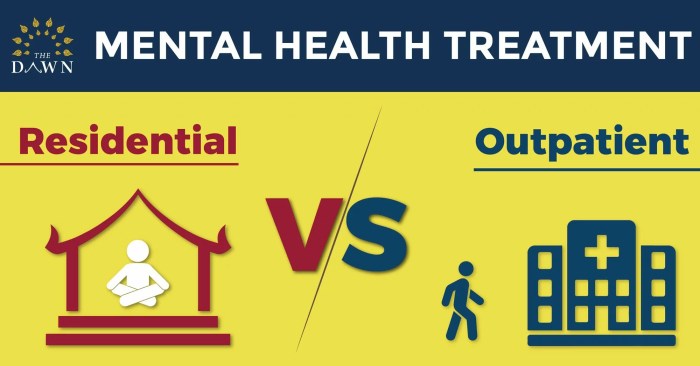
In conclusion, the comparison between Residential Mental Health Facilities and Outpatient Care highlights the diverse approaches and considerations involved in mental health treatment. It is essential to weigh the advantages and disadvantages of each option carefully to determine the most suitable path towards recovery.
Expert Answers
Is residential mental health care more expensive than outpatient care?
The cost of residential mental health care is generally higher due to the 24/7 supervision and intensive services provided.
Can individuals choose between outpatient care and residential facilities based on their preferences?
Yes, individuals can typically choose the type of care that aligns best with their needs and preferences, with input from healthcare professionals.
Are outpatient care services limited to specific types of therapy?
No, outpatient care offers a variety of therapy options including cognitive-behavioral therapy, group therapy, and family therapy among others.