
As Corporate Health and Wellness Trends in 2025 takes center stage, this opening passage beckons readers into a world crafted with good knowledge, ensuring a reading experience that is both absorbing and distinctly original. In the following paragraphs, we delve into the transformative landscape of corporate health and wellness programs, technology integration, mental health support, and diversity, equity, and inclusion initiatives.
Corporate Health and Wellness Programs
Corporate health and wellness programs have become increasingly popular in recent years as companies recognize the importance of employee well-being. These programs aim to promote healthy lifestyles, prevent illness, and improve overall quality of life for employees.
Key Components of Successful Programs
- Comprehensive Health Assessments
- Personalized Wellness Plans
- Access to Fitness Facilities or Classes
- Nutritional Counseling
- Mental Health Support Services
Impact on Employee Productivity and Morale
Successful corporate health and wellness programs have been shown to increase employee productivity, reduce absenteeism, and boost morale. Employees who feel supported in their health and well-being are more likely to be engaged and motivated at work.
Evolving to Meet Changing Needs
As the workforce continues to change, corporate health and wellness programs are evolving to meet the diverse needs of employees. This includes offering flexible work arrangements, mental health resources, and technology-driven solutions to promote well-being in the workplace.
Technology Integration in Corporate Wellness
Technology plays a crucial role in enhancing corporate wellness initiatives, offering innovative solutions to promote employee health and well-being. From wearables to health tracking apps, these tools have revolutionized the way companies approach employee wellness programs.
Role of Wearables and Health Tracking Apps
- Wearables such as smartwatches and fitness trackers enable employees to monitor their physical activity levels, sleep patterns, and overall health in real-time.
- Health tracking apps provide personalized insights and recommendations based on the data collected, empowering individuals to make informed decisions about their health.
- Integration of wearables and apps in corporate wellness programs encourages employees to stay active, manage stress, and prioritize their well-being on a daily basis.
Virtual Wellness Platforms vs. In-Person Programs
- Virtual wellness platforms offer flexibility and accessibility, allowing employees to participate in wellness activities from anywhere, at any time.
- In-person programs foster a sense of community and social interaction among employees, promoting teamwork and camaraderie in the workplace.
- Combining virtual platforms with in-person initiatives creates a holistic approach to corporate wellness, catering to the diverse needs and preferences of employees.
Data Privacy Concerns
- With the use of technology in corporate health programs, data privacy concerns have become a major issue, as sensitive health information is collected and stored electronically.
- Companies must ensure compliance with data protection regulations and implement robust security measures to safeguard employee data from unauthorized access or breaches.
- Transparent communication about data collection practices and privacy policies is essential to build trust and confidence among employees participating in technology-driven wellness programs.
Mental Health Support in the Workplace
In today's fast-paced corporate world, mental health support in the workplace has become increasingly vital. Employers are recognizing the importance of addressing mental health issues to ensure the well-being and productivity of their employees.
Strategies to Address Mental Health Issues
Companies are implementing various strategies to address mental health issues in the workplace. Some common approaches include providing access to confidential counseling services, offering mental health training for managers, promoting work-life balance, and creating a supportive company culture that prioritizes mental health.
Impact of Remote Work on Mental Health Support Programs
The shift to remote work has brought new challenges for mental health support programs. With employees working from home, companies have had to adapt their strategies to provide virtual mental health resources and support. This includes offering online counseling services, virtual wellness workshops, and promoting digital mental health apps to help employees manage stress and anxiety.
Future Trends in Mental Health Benefits
Looking ahead to the future, corporations are expected to enhance their mental health benefits to meet the evolving needs of their workforce. This may involve incorporating innovative technologies like AI-driven mental health tools, expanding mental health coverage in employee insurance plans, and implementing proactive mental health initiatives to prevent burnout and promote overall well-being in the workplace.
Diversity, Equity, and Inclusion (DEI) in Wellness Programs
In today's diverse workforce, incorporating Diversity, Equity, and Inclusion (DEI) principles in corporate wellness initiatives is crucial for ensuring that all employees feel valued and supported in their well-being journey.
Inclusive Wellness Programs
Creating inclusive wellness programs that cater to diverse employee groups is essential for promoting a sense of belonging and equity within the organization. Some examples of inclusive wellness programs include:
- Customized fitness plans that consider different cultural preferences and physical abilities.
- Mental health resources available in multiple languages to support employees from various backgrounds.
- Flexible scheduling options for wellness activities to accommodate different religious observances or cultural practices.
Challenges in Equitable Access
Despite the importance of DEI in wellness programs, ensuring equitable access to these benefits can be challenging. Some obstacles include:
- Financial barriers that may prevent certain employees from participating in wellness activities.
- Lack of awareness or understanding of available resources among employees, especially those from marginalized groups.
- Cultural stigmas surrounding mental health or wellness practices that deter some individuals from seeking help.
Impact on Corporate Wellness Trends
Looking ahead to 2025, it is predicted that DEI considerations will continue to shape corporate wellness trends. Companies will need to prioritize inclusivity and equity in their wellness programs to attract and retain a diverse talent pool. Embracing DEI in wellness initiatives not only fosters a healthier and happier workforce but also contributes to a more productive and engaged work environment.
Outcome Summary
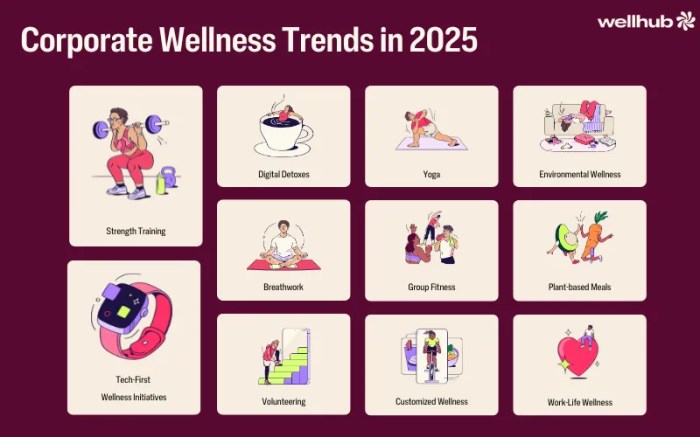
In conclusion, the evolving landscape of Corporate Health and Wellness Trends in 2025 presents a promising trajectory towards a more holistic approach to employee well-being. As organizations navigate the challenges and opportunities that lie ahead, prioritizing health and wellness in the workplace will undoubtedly lead to happier, more engaged employees and a thriving corporate culture.
Query Resolution
How are corporate health and wellness programs evolving to meet changing needs?
Corporate health and wellness programs are adapting by incorporating personalized approaches, leveraging technology for remote access, and focusing on mental health and well-being resources.
What role do wearables and health tracking apps play in promoting employee health?
Wearables and health tracking apps help employees monitor their physical activity, sleep patterns, and overall health, encouraging them to make healthier lifestyle choices.
Why is it important for companies to address mental health support in the workplace?
Mental health support is crucial for employee well-being, productivity, and overall organizational success. Companies that prioritize mental health see higher employee engagement and retention rates.
How can companies ensure equitable access to wellness benefits for all employees?
Companies can ensure equitable access by offering a diverse range of wellness programs, providing resources in multiple languages, and actively promoting inclusivity and accessibility.
How will diversity, equity, and inclusion considerations shape corporate wellness trends in 2025?
DEI principles will drive the development of inclusive wellness programs tailored to diverse employee groups, ensuring that all employees feel valued and supported in their health and well-being journey.