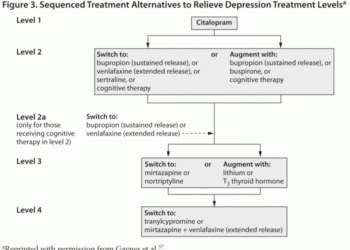

Delve into the world of Clinical Mental Health Counseling for Anxiety and Stress, where expert guidance meets the quest for inner peace. This introductory passage sets the stage for a journey filled with valuable insights and practical solutions.
The subsequent paragraph provides a detailed overview of the subject matter, offering a glimpse into the essential aspects of clinical mental health counseling for anxiety and stress.
Overview of Clinical Mental Health Counseling for Anxiety and Stress

Clinical mental health counselors play a vital role in helping individuals manage and overcome anxiety and stress. These professionals are trained to provide therapeutic interventions, support, and guidance to address mental health issues effectively.Seeking professional help for managing anxiety and stress is crucial for several reasons.
Counselors can offer evidence-based treatments tailored to individual needs, provide a safe space for clients to explore their thoughts and feelings, and offer coping strategies to improve overall well-being.Integrating counseling into treatment plans for anxiety and stress can have significant benefits.
Counselors can help clients develop healthy coping mechanisms, enhance self-awareness, improve communication skills, and promote resilience in the face of life's challenges.
Understanding Anxiety and Stress
Anxiety and stress are common mental health issues that can have a significant impact on an individual's overall well-being. Both anxiety and stress are natural responses to challenging or threatening situations, but when experienced excessively or persistently, they can become problematic.
Define Anxiety and Stress
Anxiety is a feeling of fear, worry, or unease that can be mild or severe. It is often accompanied by physical symptoms such as increased heart rate, sweating, and trembling. On the other hand, stress is the body's reaction to a challenge or demand, whether real or perceived.
It can manifest as emotional, physical, or psychological tension.
Identify Common Symptoms of Anxiety and Stress
- Constant worrying or intrusive thoughts
- Feeling restless or on edge
- Irritability or mood swings
- Difficulty concentrating
- Physical symptoms like headaches, muscle tension, or stomach issues
Explore the Impact of Anxiety and Stress on Overall Well-being
Anxiety and stress can have a profound impact on a person's overall well-being. Chronic stress can weaken the immune system, increase the risk of cardiovascular diseases, and contribute to mental health disorders. Similarly, untreated anxiety can lead to avoidance behaviors, social isolation, and a decreased quality of life.
Therapeutic Approaches in Clinical Mental Health Counseling
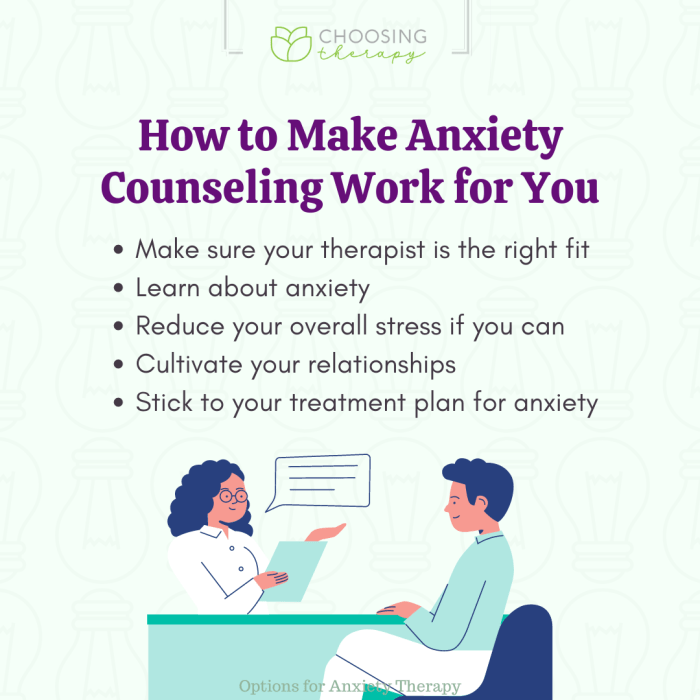
In clinical mental health counseling for anxiety and stress, various therapeutic approaches are utilized to help individuals manage their symptoms and improve their overall well-being. These approaches are evidence-based and tailored to meet the unique needs of each client.
Cognitive Behavioral Therapy (CBT)
CBT is a widely used therapeutic approach that focuses on identifying and challenging negative thought patterns and behaviors associated with anxiety and stress. By helping individuals reframe their thoughts and develop healthier coping strategies, CBT can empower clients to effectively manage their symptoms and reduce distress.
- Techniques used in CBT sessions may include cognitive restructuring, thought records, behavioral experiments, and exposure therapy.
- CBT helps individuals understand the connection between their thoughts, feelings, and behaviors, empowering them to make positive changes in their lives.
Dialectical Behavior Therapy (DBT)
DBT combines cognitive-behavioral techniques with mindfulness practices to help individuals regulate their emotions and improve their interpersonal skills. This approach is particularly effective for individuals struggling with intense emotions and difficulties in relationships.
- Skills taught in DBT include mindfulness, distress tolerance, emotion regulation, and interpersonal effectiveness.
- By learning these skills, individuals can better cope with stress, manage their emotions, and enhance their overall well-being.
Mindfulness-Based Approaches
Mindfulness-based approaches, such as Mindfulness-Based Stress Reduction (MBSR) and Mindfulness-Based Cognitive Therapy (MBCT), emphasize present-moment awareness and non-judgmental acceptance of thoughts and feelings. These approaches can help individuals cultivate a sense of calmness and resilience in the face of anxiety and stress
- Techniques used in mindfulness-based approaches may include body scans, mindful breathing, meditation, and yoga.
- Practicing mindfulness can help individuals develop a different relationship with their thoughts and feelings, reducing reactivity and promoting emotional well-being.
Role of Counseling in Coping Strategies
Counseling plays a crucial role in helping individuals develop effective coping strategies for managing anxiety and stress. By working closely with a clinical mental health counselor, individuals can learn how to identify triggers, understand their emotions, and implement personalized coping plans to navigate challenging situations.
Developing Coping Strategies
- During counseling sessions, individuals can explore various coping techniques such as deep breathing exercises, mindfulness practices, and cognitive-behavioral strategies.
- Counselors can help individuals identify negative thinking patterns and behaviors that contribute to their anxiety and stress, and work together to develop healthier coping mechanisms.
- Through counseling, individuals can also learn how to set boundaries, practice self-care, and build resilience in the face of stressors.
Implementing Coping Plans
- Counseling sessions provide a safe space for individuals to practice and implement their coping strategies in real-life scenarios, with the guidance and support of a trained professional.
- By incorporating coping techniques into their daily routines, individuals can effectively manage their anxiety and stress levels over time.
- Counselors can help individuals track their progress, make adjustments to their coping plans as needed, and provide ongoing encouragement and accountability.
Importance of Personalized Coping Plans
- Working with a clinical mental health counselor allows individuals to create personalized coping plans tailored to their unique needs, preferences, and goals.
- Personalized coping plans take into account individual strengths, resources, and challenges, ensuring that the strategies implemented are sustainable and effective in the long run.
- By collaborating with a counselor to create a personalized coping plan, individuals can feel empowered and motivated to take control of their mental health and well-being.
Integrating Self-Care Practices
Self-care practices play a crucial role in reducing anxiety and stress levels, complementing the effectiveness of clinical mental health counseling. By incorporating self-care activities into daily routines, individuals can enhance their overall mental well-being in the long term.
Examples of Self-Care Activities
- Engaging in regular physical exercise such as yoga, walking, or jogging to release endorphins and reduce stress hormones.
- Practicing mindfulness and meditation techniques to promote relaxation and mental clarity.
- Maintaining a balanced diet rich in nutrients and staying hydrated to support overall physical and mental health.
- Setting boundaries and learning to say no to excessive commitments or responsibilities to prevent burnout.
- Engaging in hobbies or activities that bring joy and allow for self-expression and creativity.
Significance of Integrating Self-Care into Daily Routines
Integrating self-care practices into daily routines is essential for maintaining long-term mental well-being. By prioritizing self-care, individuals can build resilience against the negative effects of anxiety and stress. Consistent self-care routines can help individuals manage their emotions, improve self-esteem, and foster a sense of balance in their lives.
Wrap-Up
In conclusion, the intricacies of Clinical Mental Health Counseling for Anxiety and Stress have been explored, shedding light on the importance of seeking professional help and integrating coping strategies. As we navigate the complexities of mental health, may this discussion serve as a beacon of hope and understanding.
Detailed FAQs
What are some effective coping strategies for managing anxiety and stress?
Effective coping strategies may include practicing mindfulness, engaging in physical activity, maintaining a healthy lifestyle, and seeking support from loved ones or a counselor.
How can counseling sessions help individuals develop coping strategies?
Counseling sessions provide a safe space for individuals to explore their thoughts and emotions, gaining insights that can lead to the development of personalized coping strategies tailored to their needs.
Why is integrating self-care practices important in reducing anxiety and stress?
Self-care practices play a vital role in promoting mental well-being by nurturing self-awareness, relaxation, and emotional balance, thus aiding in the reduction of anxiety and stress levels.